
TL;DR: Choosing landscaping stone comes down to matching the material to its application, confirming it can handle Oklahoma’s freeze-thaw climate, and picking a finish that fits the design—in that order.
Choosing landscaping stone starts with understanding where the stone will be used. Different outdoor features place different demands on a material, so patios, walkways, borders, and pool areas often require different types of stone. When selecting decorative rock and stone OKC for a project, evaluating the application first, followed by climate performance and finish, helps narrow the options quickly.
Three Factors That Narrow Down the Right Stone
A broad building stone selection spans dozens of finishes built for these kinds of differences, and the three factors that matter most are application, climate performance, and finish. Shoppers who work through application, climate, and finish in that order end up with a material that still looks and performs as expected years later.
Matching Stone to Its Application
Different landscaping features put different demands on stone, so the application should narrow the options before anything else does. Patios and walkways call for a stone with a stable, even surface that stays sure-footed when wet, while low borders and edging can use a rougher or more irregular cut since foot traffic isn’t a factor. Stone pool coping has its own requirements on top of that—it sits in direct, repeated contact with water and pool chemicals, so the finish and edge profile matter as much as the stone type itself.
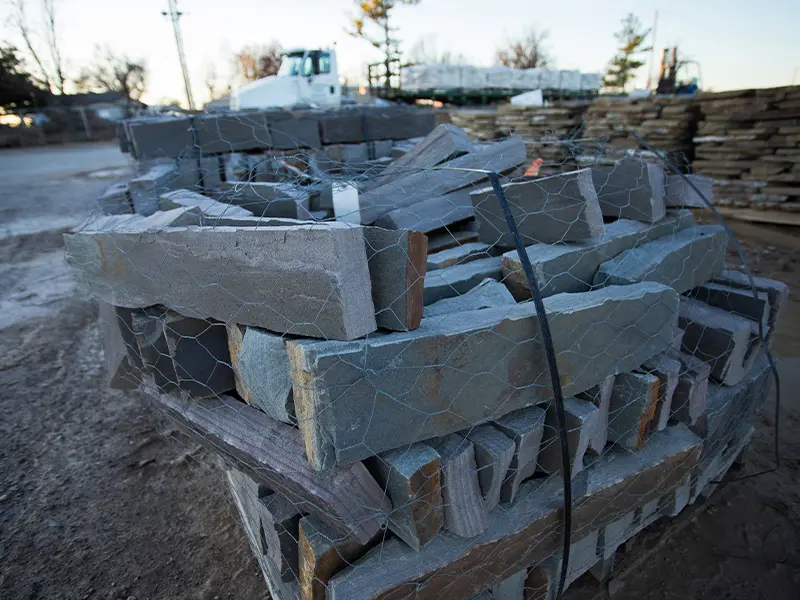
At Richburg Stone, that generally means choosing between sandstone, limestone, and bluestone, each suited to a different mix of these applications, with bluestone reserved specifically for pool coping and flooring.
Considering Oklahoma’s Climate When Choosing Stone
Oklahoma stone used outdoors has to survive both sides of the state’s weather swings—triple-digit summer heat and hard winter freezes in the same year—so climate performance belongs in the decision alongside application and looks. Natural stone commonly used for paving is often selected because it performs well through repeated freeze-thaw cycles.
Sandstone in particular has become a popular choice for landscaping projects in the region, prized for its natural texture and warm, earthy color range.
Choosing a Finish and Color for Decorative Rock and Stone OKC
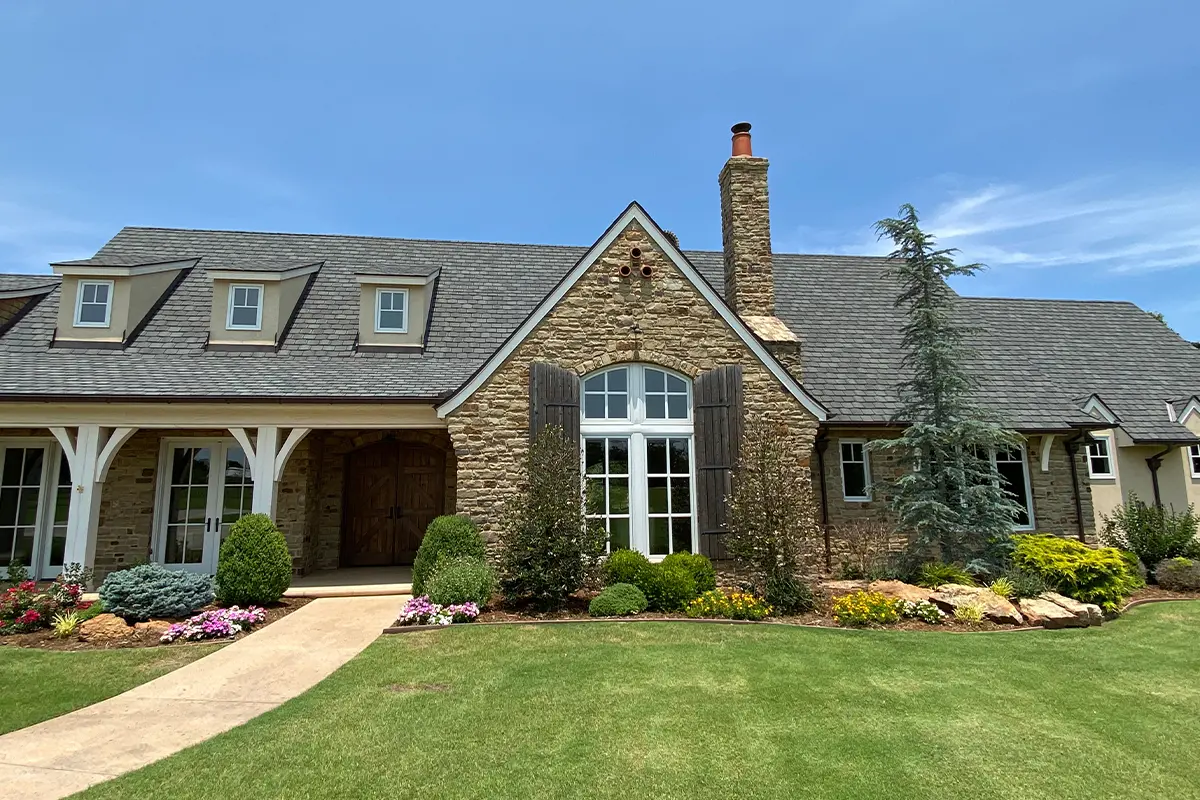
Once application and climate performance narrow the field, the finish and color of your decorative rock and stone OKC determine how the finished landscape actually looks. Tumbled and chopped finishes read as rustic and irregular, while sawn or cut finishes create a cleaner, more contemporary line—and landscaping with sandstone shows off that range particularly well, since its color spans soft creams and grays through warmer browns.
Frequently Asked Questions About Choosing Landscaping Stone
What is the best stone for a patio or walkway?
Sandstone and limestone are both strong patio and walkway choices because of their stable, slip-resistant surfaces and wide range of natural color and texture.
Can the same stone be used for both a patio and pool coping?
Sometimes, but pool coping stone is typically selected for a denser, lower-absorption profile and a rounded or bullnose edge that stands up to constant water contact, so confirm the stone is rated for coping before assuming a patio stone will also work poolside.
Does landscaping stone need to match the stone used on the house?
No. Many landscapes intentionally pair a contrasting color or texture with the home’s exterior stone, while others use the same Oklahoma stone throughout for a unified look.
How much does climate really affect which stone to choose?
More than most people expect. A stone that looks identical to another in a showroom can perform very differently once it’s exposed to repeated freezing, thawing, and direct sun for years at a time.
Key Takeaways
- Start choosing landscaping stone by application—patios, borders, and pool coping each have different requirements.
- Not every patio-rated stone works for stone pool coping—the denser, lower-absorption profile needed there is worth confirming with a supplier before assuming one stone covers both.
- Landscaping stone needs to hold up against both summer heat and winter freeze-thaw cycles, not just look good on day one.
- Finish and color—tumbled versus sawn, warm versus cool tones—should be the last decision, not the first.
- The right landscaping stone works best when application, climate performance, and finish are all weighed together, not separately.
Plan Your Landscape With Richburg Stone
At Richburg Stone, we help homeowners and builders match the right stone to each part of an outdoor project, from a durable patio surface to coping that can handle a pool year-round. Our showroom carries sandstone, limestone, and bluestone selections, so you can compare color and texture side by side before committing to a material.
Contact us to talk through your landscaping plans.


