
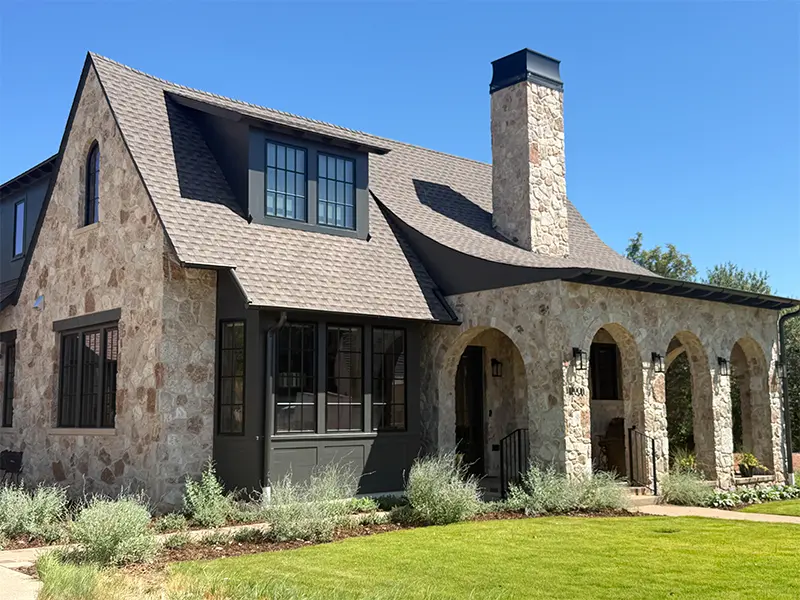
TL;DR: A building facade is a structure’s exterior-facing surface, and building it from natural stone gives a project a durable, textured exterior that gains character over time instead of wearing down like manufactured siding.
A building facade is the exterior-facing surface of a structure that serves both protective and design purposes. While facades can be built from a variety of materials, many architects, builders, and property owners choose OKC stone because it offers durability, natural texture, and long-term visual appeal.
Whether used on a commercial storefront, custom home, or entryway feature, natural stone creates a lasting exterior that stands up to Oklahoma’s changing weather while adding depth and character to the overall design.
Full-Depth Building Stone vs. Oklahoma Stone Veneer for Facades
The two primary ways to build a stone facade are full-depth building stone and natural thin veneer, and the right choice depends on the wall’s structural role. Full-depth stone is load-bearing and typically used when the wall must carry weight, while Oklahoma stone veneer is a non-structural, precision-sawn layer—generally 1″ to 1.5″ thick—applied over an existing wall assembly for the same look at a fraction of the weight.
Because both materials are cut from the same quarried stone, the color, texture, and mineral character match across a project even when a builder mixes full-bed stone on a ground-floor facade with veneer on upper gables or interior accents. This mix-and-match approach is common in modern facade design, where upper stories use lighter veneer while ground-level walls carry full-depth stone for structural support—letting a design carry one cohesive facade across an entire structure without visible transitions between material types.
Where Stone Facades Make the Biggest Impact
Stone facades do the most visual work where a building meets the eye first—entryways, storefronts, and full exterior walls. Common placements for rock and stone OKC include:
- Entryways and porch columns, where texture creates an immediate sense of quality.
- Commercial storefronts and signage walls, where stone reads as permanence to passersby.
- Fireplace surrounds and interior feature walls, where veneer’s lighter weight matters most.
- Full or partial exterior walls on custom residential and commercial builds.
Each application draws on the same underlying material qualities that make local stone construction so popular—natural color variation and a textured surface that reads differently as the light changes throughout the day.
Choosing the Right OKC Stone for a Lasting Facade
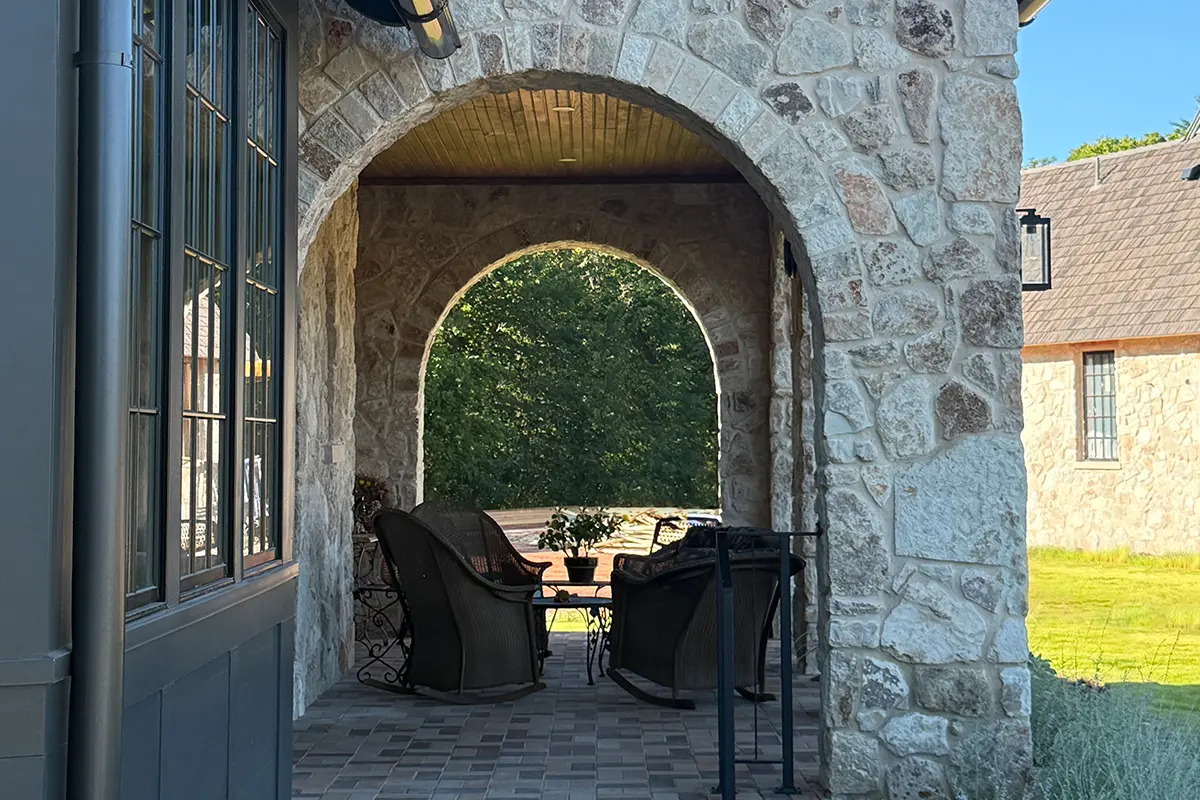
Choosing the right OKC stone over a manufactured alternative comes down to how the material performs once it’s on the building, not just how it looks in a showroom. Natural stone cladding and veneer have a well-documented reputation for holding up under extreme weather and offering a long service life, which matters in Oklahoma, where facades face both triple-digit summer heat and hard winter freezes within the same year.
That long-term performance is also why the material question deserves more attention than the color palette alone. The Richburg Stone team can help you evaluate which cuts and finishes are best suited for vertical applications, helping your facade maintain its intended appearance for years to come.
Frequently Asked Questions About Building Stone Facades
Is a stone facade structural or purely decorative?
This depends on which material is used, and it affects more than appearance. Full-depth stone wall construction typically falls under structural engineering review as part of permitting, since it’s a load-bearing assembly, while veneer applications are generally treated as a finish material and reviewed accordingly.
Can a stone facade be added to an existing building?
Yes. Because natural thin veneer is lightweight and precision-sawn, you can apply it over existing brick, block, or siding during renovation projects without major structural changes to the wall.
Does a stone facade need to match the rest of the house?
Not necessarily. Many designs intentionally contrast a stone facade against siding, stucco, or glass, while others carry rock and stone OKC across the full exterior for a unified look. The right approach depends on the project’s architectural style.
Key Takeaways
- A building facade is a structure’s exterior-facing surface, and it can be built from full-depth stone, veneer, or both.
- Oklahoma stone veneer is a lightweight, non-structural layer suited to remodels and upper-level applications, while full-depth stone is load-bearing.
- Entryways, storefronts, fireplace surrounds, and full exterior walls all draw on the same natural color and texture that makes a stone facade stand out.
- Matching the stone cut and finish to the application is what keeps a facade looking right for decades, not just at installation.
Visit Richburg Stone to Plan Your Facade
At Richburg Stone, we help builders and homeowners choose the right combination of full-depth stone and veneer for exterior projects across Oklahoma City. Contact us to talk through your next facade.


